Practical C and Advanced Data Structures in Linux
Course Description
The program takes learners from fundamentals of programming to mastering adavanced data structures such asa trees ,graphs,hashing, and more .Training is conducted in a Linux environment ,ensuring students get exposure to real -world system -level programming . The blend of theory ,lab sessions,and project work work ensures graduates are job ready.
Course Overview
This course is designed to build a strong foundation in C programming and take learners deeper into Advanced Data Structures with a Linux-based environment. Students will gain The program takes learners from fundamentals of C programming to mastering advanced data structures such as Trees, Graphs, Hashing, and more. Training is conducted in a Linux environment, ensuring students get exposure to real-world system-level programming. The blend of theory, lab sessions, and project work ensures graduates are job-ready., The program takes learners from fundamentals of C programming to mastering advanced data structures such as Trees, Graphs, Hashing, and more. Training is conducted in a Linux environment, ensuring students get exposure to real-world system-level programming. The blend of theory, lab sessions, and project work ensures graduates are job-ready., and the ability to solve real-world computational problems with optimised solutions. Our C Programming course in Kurnool is designed to build a strong foundation in programming and system-level development. With structured modules, assignments, and hands-on projects, you will learn C from fundamentals to advanced concepts, enabling you to solve real-world programming challenges efficiently. iSignal’s interactive training approach ensures a productive and career-focused learning experience.
Build Your Programming Foundation. Secure Your IT Career.
- Software Developer / Engineer
- System Programmer
- Linux Application Developer
- Embedded System Engineer
- Algorithm Engineer
- Protocol Developer
- Research & Development Roles in Wireless, VLSI, and AI-Driven Systems
Pre-requisites
- Basic knowledge of programming (preferred, not mandatory)
- Familiarity with Linux OS (optional, covered in course)
- Enthusiasm to learn coding and solve problems
Course Duration
📅 24 Weeks (Weekend/Weekday Batches)
💰Course Fee: INR 14,999/- 🎉(Limited Time Offer: Flat 20% OFF for first 30 enrolments → 🔥INR 11,999/- only)
🎯iSignal Academy Benefits
✔ Hands-on Projects & Real-time Assignments
✔ Expert Trainers & Industry Veterans
✔ Affordable Fees with Flexible Learning Modes
✔ Placement Assistance & Interview Preparation
✔ Industry-Accredited Certification
C Detailed Course Content
Module 1: Basics of C++
- The Computer Architecture in Brief
- C: The History and The Future World Changer Coding Analogy with English.
- Basic C Program and Analysis: Data Access, Process,
- Send/Show
- The Linux Introduction, vi-editor and Program
- Compilation
- The Compiler analysis (RAM) (static and dynamic) and
- Architecture history and portability.
- C Library an Introduction
- C sample Programs and Basic Compilation of a Program
Module 2: Basic Programming Constructs
- Basic C Constructs: Constants, variables, Expressions,
- Precedence
- Numerals, Data Types, float, char, int, double
- Arrays, strings, pointers, structures, union
- C Keywords
- Decision Making and Flow Control, Nested- Concept.
Module 3: C Operators
- Assignment Operators
- Shorthand Assignment Operators
- Relational Operators
- Equality Operators
- Bitwise Operators
- Arithmetic Operators
- Increment and Decrement Operators
- Conditional Operators
- Logical Operators
- Ternary Operators
Module 4: Flow Control
- f and Switch-case statements
- While Loop
- For Loop Do while
- Sample Logics for Practice
Module 5: Functions and Pointers
- Prototype and Definition
- Passing values and Address
- Introduction to Pointers and Notation
- Functions and Pointers Relation
- Library Functions
- Writing User defined functions
- Calling and Called function
- What happens in the memory for function call?
- Call Back function with Pointers(Function Pointers)
Module 6: Storage Classes
- Local Variables
- Static, Extern, Auto, Register
- Scope and Life time of a Variable
- Data Types Revisited – unsinged, Signed, long short
Module 7: Bitwise Operators
- One’s Complement Operator
- Right Shift Operator
- Left Shift Operator
- Bitwise AND Operator
- Bitwise OR Operator
- Bitwise XOR Operator
Module 8: Arrays
- What Is an Array
- How to Represent an Array
- How it is access using C
- How it is Stored in the Memory
- What all the Operations we do on Arrays
- Multi-Dimensional Arrays
- 2D Arrays
- 3D-Arrays
- Memory Storage Understanding of the 2D-Arrays
Module 9: Strings
- Basic Strings
- Storing in Memory
- Accessing the Strings
- Manipulation of Strings
- Standard Library Functions
- Some String manipulation Best Practices
- Ways of accessing Strings
Module 10: Pointers and Arrays
- Basic Introduction
- Accessing the Arrays using Pointers
- Accessing the 2D-Arrays using pointers
- Passing the array to a function and returning
- Passing 2D Array and Returning 2D Arrays
- Dynamic memory allocation to a 2D array
- Array of pointers and pointer to an array.
Module 11: Pointers and Strings
- String and Standard library functions recap
- Pointers and strings
- Const Qualifier
- Passing and returning const strings
- 2D-array of characters
- Array of Pointers to Strings
- Limitation of Array of Pointers to Strings
Module 12: Structures
- What Is an Structure
- How to Represent an Structure
- How it is access using C
- How it is Stored in the Memory
- Do’s and Don’ts on Structure Operations
Module 13: Pointers and Structures
- Arrays of Structures
- Structure Pointers
- Offset, Bit fields, boundary, force alignment of Structures
- Packing of Structures(Used in Network Programming)
- Self-Referential Structures
Module 14: Data Structures (Basic Operations)
- Types of Basic Data Structures
- Dynamic Arrays
- Stacks
- Queues (linear, circular)
- Linked List
- Linear – Single, double
- Non-Linear (Trees, Graphs, Heaps)
- Advanced Data Structures
- Trees: Overview of Different Types
- Binary Trees
- Traversal of a Binary Tree
- Threaded Binary Tree
- Trees: Overview of Different Types
- Operations on Linked Lists
- Merging of Linked List
- Circular Linked List
- Linked List and Polynomials
- Reverse a Linked List
- Sorting a Linked List
- Delete a Nth Node from the end of the Linked List
Module 15 : Important Algorithms and Complexity Calculations
- Bubble Sort
- Insertion Sort
- Quick Sort
- Merge Sort
- Heap Sort
- Searching
- Linear Search
- Binary Search
- Hashing
- Complexity Calculations:
- Analysis of Algorithms
- Time, Speed, Memory
- Best case, Worst case and average Case Analysis
Course Outcome
- Write optimized C code in a Linux environment
- Implement and analyze advanced data structures
- Solve computational problems with efficiency
- Use Linux tools for debugging, compiling, and automation
- Build strong foundations for interviews & competitive exams
Job Availability
- 📊 Thousands of openings every year for C Programmers & Embedded Developers in India.
- With growing demand in IT, Embedded, and System Software, opportunities are unlimited!
Features
- Live Instructor-Led Classes – Learn directly from industry experts with interactive sessions.
- Hands-on Coding Practice – Work on real-time coding assignments & problem- solving exercises.
- Mini Projects & Case Studies – Apply concepts to practical scenarios for deeper understanding.
- Internship & Placement Assistance – Guidance, referrals, and interview preparation support.
- Flexible Learning Options – Online + Offline (Classroom) modes available.
- Industry-Recognized Certification – Boost your profile with a valued credential
Career Paths After C Training
- C Programmer
- Embedded Systems Developer
- Software Developer
- System Engineer
- IoT Developer
- Application Programmer
Course Highlights
- Duration: 6 Month (Instructor-led)
- Mode: Online + Offline
- Language: English
- Live Projects: 3 real-time project
- Certification: Industry Recognized placement assistance upto 1 year
- Career Support: Placement guidance + Interview preparation
✨ Enroll Today at iSignal Kurnool
👉 Transform your coding journey with C expertise that lasts a lifetime!
📲 Get a FREE Demo Session on C – Just send “Hi” on WhatsApp 👉 7829450444
Interested in our Training? Fill out the enquiry form and our team will get back to you with details on fees, schedules, and offers.

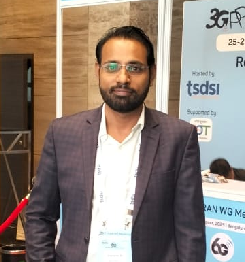
Sreeram Bugude
Founder & CEO
Wireless RAN Head of Strategy – 5G,6G, with iSignal Research, Bangalore, with nearly 18Yrs+ experience in Wireless Domain worked in Nokia, Intel, Samsung, Mediatek, Infosys, L&T, and wireless startups, delivered multiple Wireless webinars, FDPs, Workshops in institutes like IIT Patna, IIITDM, Kurnool. Being IEEE ComSoc Member He had presented multiple 4G/5G Solutions in various International conferences like India Mobile Congress, New Delhi. Currently he is involved in Next Generation 5G/6G Air Interface Research and Development of Proof of Concepts, along with activities like career enablement, Trainings, LabSetups, Consulting
Research Focus:
mmwave, Beamforming, CSI-Reporting,massiveMIMO, OTFS, 6G, AI, ML for wireless RAN, Resource Allocations, SDR, GNU Radio, Python, C++ based Simulations for 6G
For more details please connect over linkedin Professional Network: https://www.linkedin.com/in/sreeram5g/